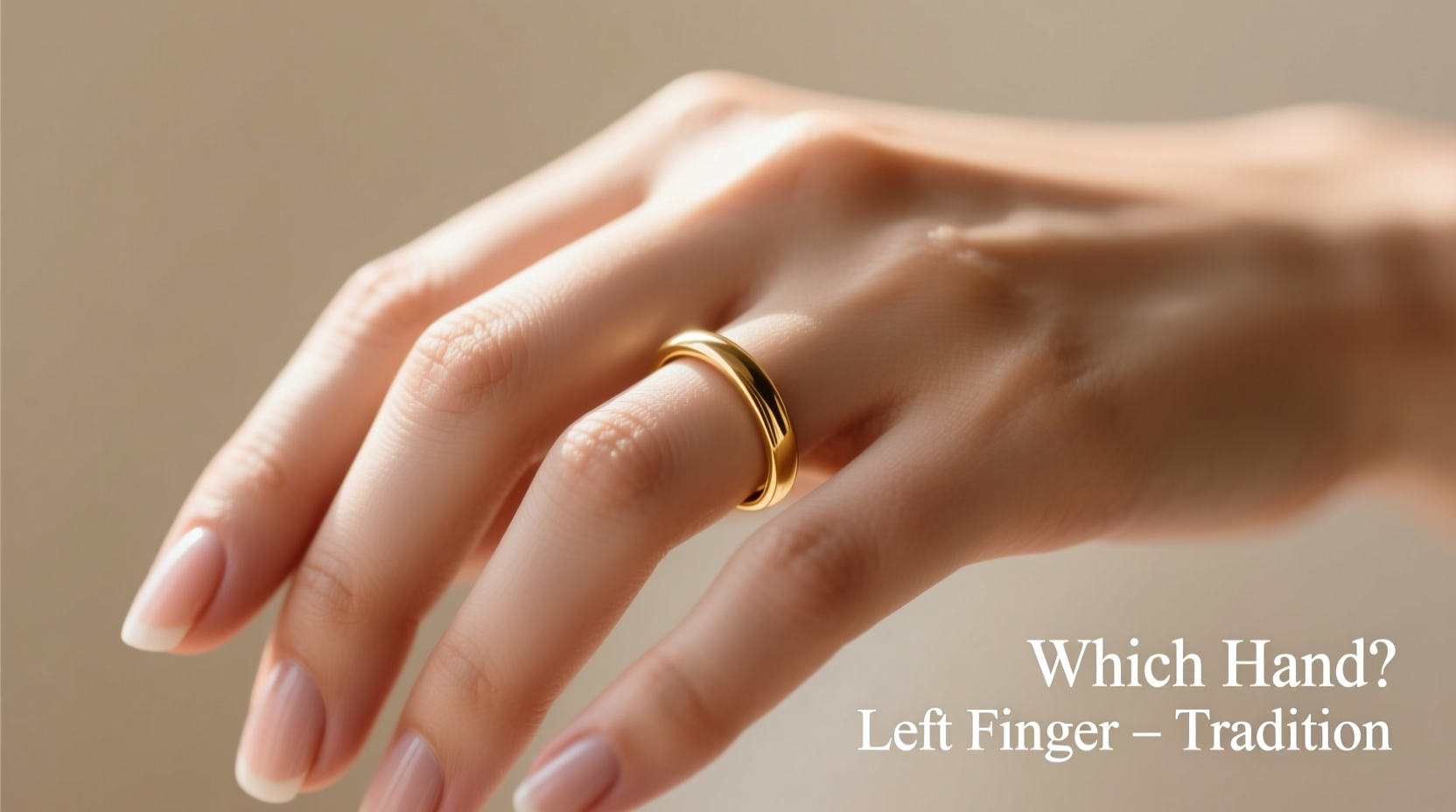
The wedding ring traditionally goes on the fourth finger of the left hand in many Western countries, including the United States, Canada, and the United Kingdom. This custom stems from the ancient belief in the vena amoris, or “vein of love,” thought to run directly from this finger to the heart. Understanding what hand wedding ring etiquette follows can help couples honor tradition while making informed choices based on culture, religion, or personal preference. While the left-hand tradition is widespread, it’s not universal—in countries like Germany, Russia, and India, the wedding band is often worn on the right hand. This article explores the global customs, historical roots, religious influences, and modern trends that shape where people wear their wedding rings.
Historical Origins of Wedding Ring Placement
The practice of wearing a wedding ring on a specific finger dates back thousands of years. Ancient Egyptians were among the first to exchange rings made of braided reeds or hemp as symbols of eternal love, placing them on the fourth finger of the left hand. The circular shape represented eternity, with no beginning or end. The Romans adopted this tradition, believing the vena amoris connected the fourth finger directly to the heart, making it the most romantic choice for a symbol of love.
Although modern anatomy has disproven the existence of a unique vein connecting only that finger to the heart, the sentiment remains powerful. Over time, this Roman-era belief became deeply embedded in European Christian traditions. By the Middle Ages, exchanging rings during marriage ceremonies was standard in Western Europe, and the left-hand ring finger became the default location.
Cultural Variations: What Hand Does a Wedding Ring Go On Around the World?
While the left-hand tradition dominates in English-speaking countries, numerous cultures place the wedding ring on the right hand. These differences often stem from religious beliefs, regional customs, or historical developments. Below is a breakdown of international practices:
| Country/Region | Wedding Ring Hand | Notes |
|---|---|---|
| United States, UK, Canada, France | Left hand | Follows Roman and Christian traditions |
| Germany, Austria, Netherlands | Right hand | Engagement ring also worn on right hand |
| Russia, Ukraine, Poland, Bulgaria | Right hand | Rooted in Eastern Orthodox tradition |
| India | Right hand (often) | Varies by region; some women wear toe rings |
| Brazil, Turkey, Greece | Right hand | Engagement ring may switch hands after marriage |
| Mexico, Spain, Portugal | Left hand (common), but varies | Some regions use right hand post-ceremony |
These variations highlight that there is no single “correct” way to wear a wedding ring. Couples planning cross-cultural weddings should consider these traditions when designing their ceremony and choosing ring styles.
Religious Influences on Ring Placement
Religion plays a significant role in determining which hand receives the wedding ring. Different faiths have distinct rituals and symbolic meanings tied to marriage and jewelry.
Christianity
In most Western Christian denominations (Catholic, Protestant, Anglican), the wedding ring is placed on the left ring finger during the ceremony. The act symbolizes the couple’s lifelong commitment before God. In Eastern Orthodox Christianity, however, the ring is typically blessed and exchanged three times between the couple’s right hands, ultimately resting on the right ring finger. This gesture represents the Holy Trinity and the unity of husband and wife under divine blessing.
Judaism
During a traditional Jewish wedding, the groom places a plain gold band on the bride’s right index finger in front of two witnesses. This placement ensures visibility and adherence to halachic (Jewish legal) requirements. After the ceremony, many brides move the ring to the left hand for daily wear, blending religious tradition with local custom.
Islam
Islamic teachings do not prescribe a specific hand for wedding rings. However, men are prohibited from wearing gold, so Muslim grooms often choose silver or platinum bands worn on either hand based on cultural norms. Women may wear gold rings on any finger, though the right hand is common in Middle Eastern and South Asian Muslim communities.
Hinduism
In Hindu weddings, brides often receive toe rings (bichiya) and multiple finger rings as part of the Saptapadi (seven steps) ritual. While gold bangles and nose rings hold greater significance, finger rings are typically worn on the right hand, especially in northern India. Urban couples may adopt Western styles but still incorporate traditional elements into their attire.
Modern Trends and Personal Choices
Today, many couples prioritize personal meaning over strict tradition. Some choose to wear their wedding bands on the right hand due to dominant hand usage, career demands (e.g., surgeons, mechanics), or aesthetic preference. Others stack engagement and wedding rings across both hands or design matching sets for symbolic balance.
Same-sex couples often reinterpret traditional symbolism, sometimes exchanging rings on both hands to represent equality and mutual commitment. Custom engraving, alternative metals (titanium, wood, silicone), and non-traditional designs reflect evolving attitudes toward marriage and identity.
It’s also increasingly common for individuals to wear promise rings, eternity bands, or anniversary rings alongside their wedding bands. Knowing what hand wedding ring etiquette allows can empower couples to create meaningful, personalized traditions without feeling bound by outdated rules.
Practical Tips for Choosing and Wearing Your Wedding Ring
- Consider your lifestyle: If you work with your hands, a low-profile band or durable material like tungsten or ceramic may be more practical than a high-set diamond ring.
- Match your engagement ring: Ensure the wedding band complements your engagement ring in metal type, width, and style. Many jewelers offer “match sets” designed to fit together seamlessly.
- Think about comfort: Try on different weights and finishes. A heavier ring might feel substantial at first but become uncomfortable over time.
- Respect cultural or family expectations: If marrying into a culture with strong ring-wearing customs, discuss expectations openly with your partner and future in-laws.
- Engrave for meaning: Add initials, wedding date, or a short phrase inside the band. Popular engravings include “Forever,” “Always,” or coordinates of where you met.
Avoiding Common Mistakes
Even with careful planning, couples sometimes make avoidable errors when selecting or wearing wedding rings. Being aware of these pitfalls can prevent frustration later:
- Ignoring resizing limitations: Some materials (like wood or certain alloys) cannot be resized. Always confirm resizing options before purchase.
- Overlooking insurance: Wedding rings are valuable and easily lost. Consider insuring them through a homeowner’s policy or specialized jewelry insurer.
- Assuming one-size-fits-all: Finger size changes with temperature, weight, and age. Get sized professionally at the end of the day when fingers are slightly swollen for the most accurate fit.
- Wearing rings during risky activities: Remove rings before swimming, gardening, or exercising to avoid damage, loss, or skin irritation.
- Forgetting maintenance: Regular cleaning and professional inspections help maintain shine and structural integrity, especially for prong-set stones.
Cross-Cultural Weddings: Bridging Traditions
Couples from different cultural backgrounds must navigate varying expectations about ring placement. Open communication is essential. Some opt to follow one partner’s tradition, while others blend customs creatively.
For example, a couple with American and Russian heritage might exchange rings on the left hand during the ceremony (per U.S. custom) and then switch them to the right hand afterward as a nod to the Russian tradition. Alternatively, they could wear engagement rings on the left and wedding bands on the right, creating a hybrid system that honors both lineages.
Wedding officiants and planners can assist in incorporating these nuances into the ceremony script, ensuring clarity and respect for all involved.
Frequently Asked Questions About Wedding Ring Placement
- Do engagement rings and wedding rings go on the same hand?
- Yes, in most Western cultures, both rings are worn on the fourth finger of the left hand. The wedding band is usually placed closest to the heart (innermost), followed by the engagement ring.
- Can I wear my wedding ring on a different hand after marriage?
- Absolutely. While tradition guides initial placement, many people change hands for comfort, cultural alignment, or personal reasons. There’s no rule against adapting your ring wear over time.
- Why do some people wear wedding rings on the right hand?
- This practice is common in Eastern European, German, and Indian cultures. It often reflects religious beliefs (such as Eastern Orthodoxy) or national customs passed down through generations.
- Is it bad luck to take off your wedding ring?
- No credible tradition suggests removing your ring brings bad luck. However, some superstitious beliefs exist locally. More importantly, taking it off increases the risk of loss or theft.
- Should men and women wear rings on the same hand?
- In most cultures, yes—both spouses wear rings on the same hand according to shared tradition. But in intercultural marriages, differences may occur, and that’s perfectly acceptable.
In conclusion, understanding what hand wedding ring customs vary globally empowers couples to make informed, meaningful decisions. Whether following centuries-old rituals or forging new paths, the wedding ring remains a profound symbol of love, commitment, and unity. By respecting tradition while embracing individuality, modern couples can honor the past and celebrate their unique journey together.





 浙公网安备
33010002000092号
浙公网安备
33010002000092号 浙B2-20120091-4