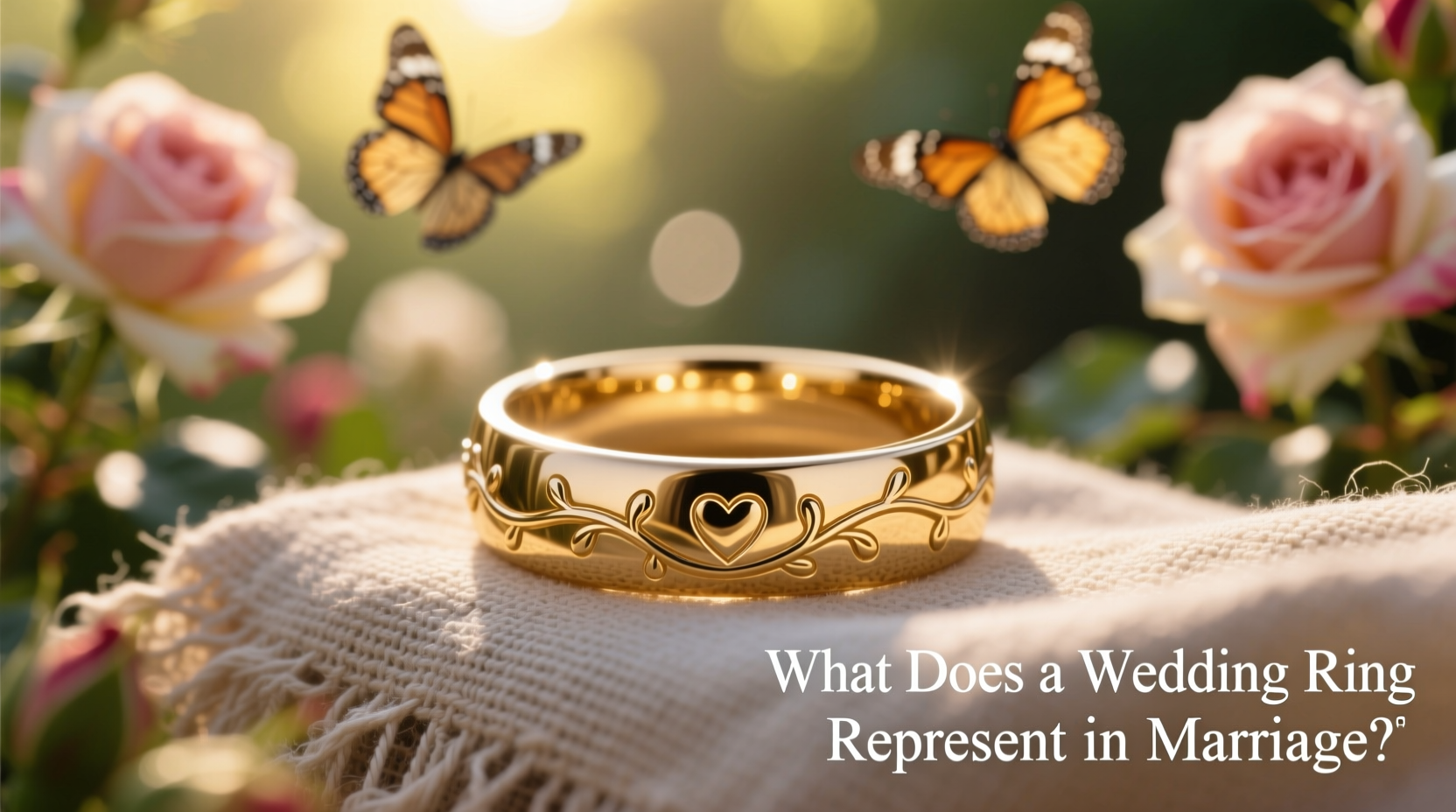
A wedding ring represents enduring love, lifelong commitment, and the unbroken circle of eternal partnership in marriage. This symbolic band, often crafted from precious metals like gold or platinum, serves as a visible pledge between two individuals vowing to share their lives. The concept of what does a wedding ring represent extends beyond mere jewelry—it embodies unity, fidelity, and mutual respect. Rooted deeply in tradition, the circular shape with no beginning or end reflects the idea of infinity, reinforcing the promise of forever. Across cultures and centuries, this simple yet profound piece of wedding wear has remained a cornerstone of marital symbolism.
The Historical Origins of Wedding Rings
The tradition of exchanging wedding rings dates back thousands of years, with origins tracing to ancient Egypt around 1500 BCE. Egyptians believed the circle represented eternity due to its continuous form without start or finish. They used braided reeds or hemp to create rings worn on the fourth finger of the left hand, based on the belief that a vein—the vena amoris, or “vein of love”—ran directly from this finger to the heart.
Romans adopted this custom, using iron rings to symbolize strength and permanence. As Christianity spread throughout Europe, the church incorporated the ring into nuptial ceremonies by the 9th century. By the Middle Ages, engraved rings with religious inscriptions became common. In England, during the 16th century, the practice evolved into giving multiple rings—posy rings inscribed with poetic verses were popular among couples seeking romantic expression.
Today’s modern wedding bands reflect both historical continuity and personalization. While materials have shifted from plant fibers to durable metals, the core meaning remains unchanged: a public declaration of devotion and shared future.
Symbolism Behind the Circular Shape
The most universally recognized feature of a wedding ring is its circular design. Unlike other shapes, the circle has no beginning and no end, making it an ideal metaphor for everlasting love. When asking what does a wedding ring represent, one cannot overlook the significance of this geometry.
- Eternity: The loop signifies infinite connection and timeless affection.
- Unity: Two lives becoming one; the merging of individual paths into a shared journey.
- Perfection: A flawless shape representing harmony and balance in a relationship.
- Protection: Historically, rings were seen as talismans guarding against misfortune or infidelity.
This geometric purity allows the ring to transcend language and culture, serving as a silent but powerful communicator of emotional bonds.
Cultural Variations in Wedding Ring Traditions
While the symbolism of love and commitment is nearly universal, customs regarding how and where wedding rings are worn vary significantly across regions. Understanding these differences helps answer not only what does a wedding ring represent but also how diverse societies express that meaning.
| Country/Region | Wearing Hand | Key Cultural Notes |
|---|---|---|
| United States & Canada | Left hand, ring finger | Influenced by Roman tradition; engagement ring typically worn alongside wedding band. |
| Germany & Russia | Right hand, ring finger | Historical Christian and Orthodox influences dictate right-hand usage. |
| India | Left hand (women), varies by region | Often includes toe rings and bangles; gold rings signify prosperity and marital status. |
| Brazil | Right hand during engagement, left after marriage | Transition marks formal union; some switch back post-wedding. |
| Greece | Right hand | Orthodox ceremony places ring on right hand as sign of divine blessing. |
These variations illustrate that while the essence of what a wedding ring represents—love, fidelity, and union—is consistent, its expression is shaped by religious beliefs, historical practices, and national identity.
Materials and Design: What Your Choice Says About You
Modern couples have countless options when selecting their wedding bands, from classic yellow gold to alternative materials like titanium or silicone. Each choice carries subtle connotations about values, lifestyle, and aesthetics.
- Gold (Yellow, White, Rose): Timeless elegance; yellow gold denotes tradition, rose suggests romance, white offers a modern look.
- Platinum: Durable and hypoallergenic; associated with luxury and longevity.
- Titanium & Tungsten: Popular among active individuals; symbolize resilience and practicality.
- Silicone Bands: Increasingly used by first responders or athletes; represent adaptability and safety without sacrificing symbolism.
- Engravings: Personal messages inside the band deepen emotional resonance—names, dates, coordinates, or short vows enhance meaning.
Selecting a material isn’t just aesthetic—it reflects how you view your marriage. A couple choosing matching hammered-finish bands may value authenticity and imperfection, while those opting for sleek, minimalist designs might prioritize simplicity and modernity.
The Role of the Wedding Ring in Ceremony and Daily Life
During the wedding ceremony, the exchange of rings is often the emotional climax. It follows the vows, acting as a physical manifestation of spoken promises. The officiant typically says something like, “With this ring, I thee wed,” linking the object directly to the covenant being made.
In daily life, the ring functions as both reminder and signal:
- Personal Reminder: For the wearer, it reinforces their commitment, especially during challenging times.
- Social Signal: To others, it communicates marital status, potentially influencing interactions in professional or social settings.
- Emotional Anchor: Many report touching their ring unconsciously when thinking of their partner or needing reassurance.
Some choose to remove their rings temporarily for work or travel, while others never take them off—even sleeping with them on. There’s no single “correct” way to wear a wedding ring every day; consistency matters less than intentionality.
Common Misconceptions and Mistakes to Avoid
Despite its widespread use, misunderstandings about wedding rings persist. Clarifying these helps ensure the symbol retains its intended power.
- Mistake #1: Assuming All Cultures Wear Rings on the Left Hand
As shown earlier, many countries use the right hand. Ignoring this can lead to awkward assumptions or incorrect advice when planning intercultural weddings. - Mistake #2: Believing Expensive Rings Equal Greater Love
The value lies in the promise, not the price tag. Pressure to spend excessively distorts the true meaning of what does a wedding ring represent. - Mistake #3: Neglecting Comfort and Practicality
Choosing a delicate band for someone who works with their hands can result in damage or loss. Function should inform form. - Mistake #4: Overlooking Ring Sizing and Fit
A poorly fitting ring causes discomfort and may be removed frequently, weakening its symbolic presence. - Mistake #5: Failing to Discuss Expectations
Not all partners assume they’ll wear a ring. Open conversation ensures alignment on this meaningful gesture.
Wedding Rings in Non-Traditional and Same-Sex Marriages
In contemporary society, wedding rings are embraced by all types of couples, including same-sex and non-binary partners. Their symbolism adapts fluidly to different relationship structures.
For LGBTQ+ couples, the ring can carry added layers of meaning—public affirmation of identity, defiance of societal norms, and celebration of hard-won legal rights. Some choose mismatched styles to honor individuality within unity, while others prefer identical bands to emphasize equality.
Non-traditional unions may incorporate dual rings, colored gemstones, or even temporary tattoos during ceremonies. These creative expressions still center on the fundamental question: what does a wedding ring represent? Even when form changes, the core ideals of loyalty, partnership, and mutual care remain intact.
How to Choose a Meaningful Wedding Ring
Selecting a ring should be more than a shopping trip—it’s a ritual in itself. Here are actionable steps to help you choose a band rich in personal significance:
- Discuss Symbolism Together: Talk about what marriage means to both of you. Is it adventure? Stability? Growth? Let those values guide your selection.
- Consider Lifestyle Needs: Will the ring withstand daily wear? Do you need scratch-resistant materials?
- Set a Realistic Budget: Focus on meaning over cost. Many meaningful rings are modestly priced.
- Explore Custom Options: Engraving, unique textures, or family heirloom elements add deep personal resonance.
- Try Before You Commit: Wear sample rings for a few days to assess comfort and visibility in your routine.
Remember, the best ring is one that feels authentic to your relationship—not dictated by trends or external expectations.
Frequently Asked Questions
Q: What does a wedding ring represent spiritually?
A: Spiritually, a wedding ring often symbolizes divine blessing on the union, eternal soul connection, and sacred vows witnessed by higher powers, particularly in religious ceremonies.
Q: Can you wear a wedding ring if you’re not legally married?
A: Yes. Some couples wear rings in committed relationships without legal marriage. However, context matters—social perception may vary depending on culture or setting.
Q: Should both partners wear the same style of ring?
A: Not necessarily. Matching sets are popular, but many couples choose complementary rather than identical designs to reflect individual personalities.
Q: What happens to the wedding ring after death?
A: Traditions vary. Some keep the ring on, others pass it down as an heirloom, and some widows/widowers continue wearing it as a memorial.
Q: Is it okay to change your wedding ring later?
A: Absolutely. Life changes—fingers grow, tastes evolve, circumstances shift. Updating your ring doesn’t diminish your commitment; it honors your evolving journey together.





 浙公网安备
33010002000092号
浙公网安备
33010002000092号 浙B2-20120091-4