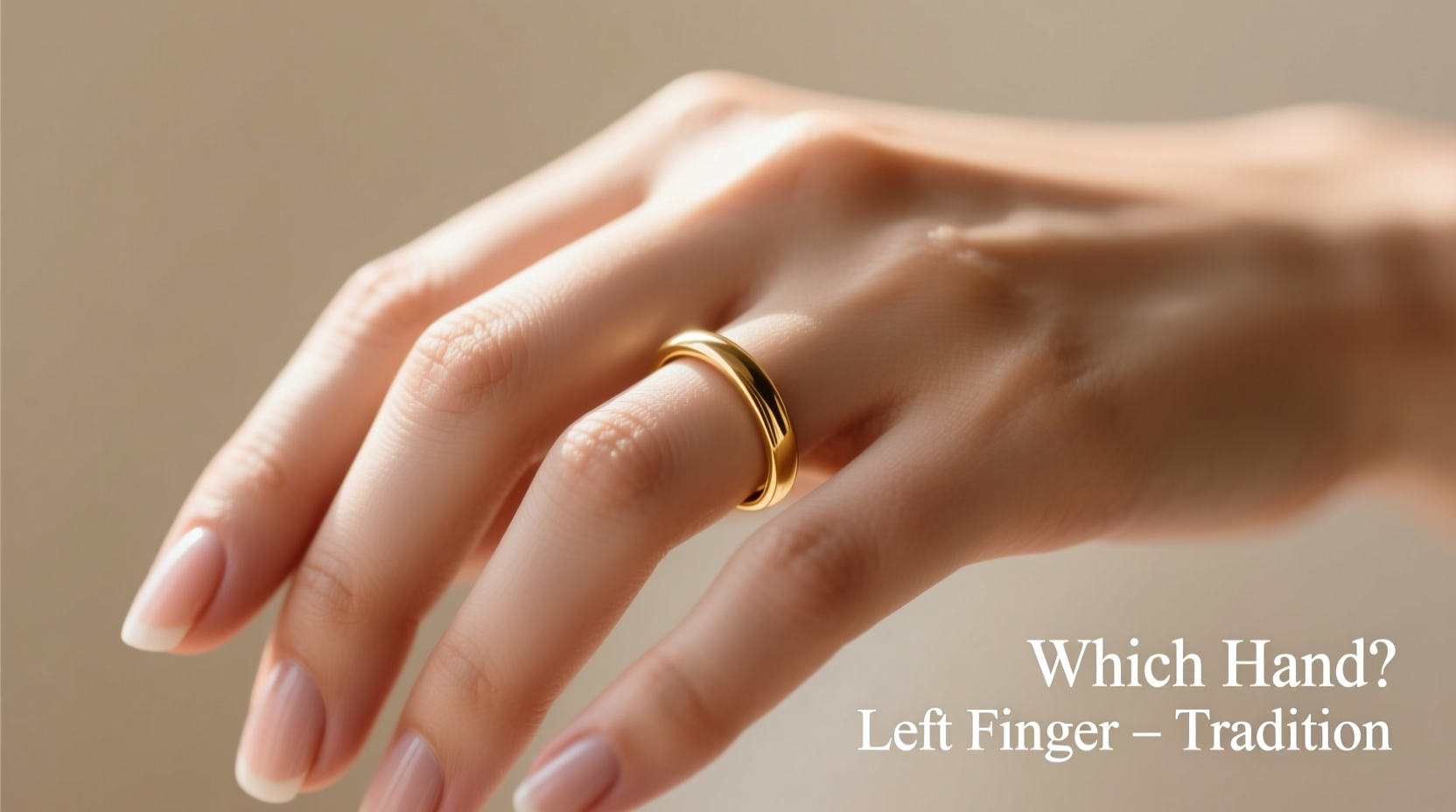
The wedding ring typically goes on the fourth finger of the left hand, commonly known as the 'ring finger,' in many Western countries such as the United States, Canada, and the United Kingdom. This tradition stems from the ancient belief that the vein in this finger—called the vena amoris, or 'vein of love'—runs directly to the heart. While this anatomical notion has been debunked, the symbolic gesture endures. Understanding how much wedding symbolism is tied to this simple act reveals why so many couples still honor this custom. However, traditions vary globally, and knowing where to wear your wedding ring can depend on cultural, religious, and even regional practices.
Historical Origins of the Ring Finger Tradition
The practice of wearing a wedding ring on the fourth finger of the left hand dates back to ancient Egypt and Rome. Egyptians believed in the vena amoris, a mystical vein connecting the ring finger directly to the heart. Romans adopted this idea, reinforcing it through marital rituals. Early Christian ceremonies later incorporated the ring exchange, solidifying its place in Western wedding customs.
By the Middle Ages, European engagement and wedding rings were routinely placed on the left ring finger during church ceremonies. The 1549 Book of Common Prayer in England formalized the ritual with the phrase: 'With this ring, I thee wed,' guiding the groom to place the ring on the bride’s left hand. Over centuries, this became standard across most English-speaking nations.
Cultural Variations: Where Else Do People Wear Wedding Rings?
While the left-hand tradition dominates in North America and Western Europe, numerous cultures place wedding rings on the right hand. It's essential for couples in multicultural relationships or those marrying abroad to understand these differences.
- Germany and the Netherlands: Couples traditionally wear wedding rings on the right hand. In Germany, engagement rings are worn on the left, then moved to the right upon marriage.
- Russia, India, Greece, and Spain: The right hand is customary for wedding bands due to religious and cultural symbolism. In Orthodox Christian traditions, priests bless the right hand, making it more sacred for such tokens.
- South America: Countries like Colombia, Peru, and Cuba also favor the right ring finger for wedding bands.
- Jewish Weddings: During the ceremony, the ring is placed on the right index finger, but many couples switch it to the left ring finger afterward for daily wear.
These variations highlight that there is no universal rule—only traditions shaped by history and belief systems.
Religious Influences on Wedding Ring Placement
Religion plays a significant role in determining which hand receives the wedding ring. Here's a breakdown across major faiths:
| Religion | Ring Hand | Notes |
|---|---|---|
| Christianity (Protestant/Catholic) | Left hand | Standard in Western churches; rooted in Roman tradition. |
| Eastern Orthodox Christianity | Right hand | Symbolizes strength and divine blessing; used in Greece, Russia, Ukraine. |
| Judaism | Right index finger (ceremony), often switched post-ceremony | Rabbi places ring on right index finger during kiddushin; practicality leads some to move it later. |
| Islam | No strict rule; varies by culture | Men may wear silver rings on the right pinky; women's practices vary widely. |
| Hinduism | Toe rings common; finger rings vary | Brides often wear toe rings (bichiya) on second toes; finger rings depend on regional customs. |
Modern Trends and Personal Preferences
In today’s diverse world, many couples choose ring placement based on comfort, aesthetics, or personal meaning rather than strict tradition. Some key trends include:
- Matching sets on both hands: Especially among long-distance couples or those honoring dual heritages.
- Stacking rings: Engagement rings on the left, wedding bands on the right, allowing for creative jewelry combinations.
- Gender-neutral choices: Same-sex couples often blend traditions or create new ones, emphasizing equality and individuality.
- Tattoo rings: Permanent ink designs on either hand serve as symbolic alternatives to metal bands.
Ultimately, how much wedding symbolism you incorporate depends on your values and relationship narrative. There’s growing acceptance of non-traditional choices, especially as younger generations prioritize authenticity over convention.
Practical Considerations When Choosing Ring Placement
Beyond symbolism, several practical factors influence where to wear your wedding ring:
Hand Dominance
Right-handed individuals may prefer wearing their ring on the left hand to reduce wear and tear. Conversely, left-handed people might find a right-hand ring more prone to scratches or snags during daily activities.
Occupational Hazards
Jobs involving machinery, healthcare, construction, or manual labor may require removing rings for safety. In such cases, some opt for silicone rings or wear them only during ceremonies and special occasions.
Comfort and Fit
Fingers swell throughout the day, especially in heat or during exercise. A ring that fits perfectly in the morning might feel tight later. Trying the ring on different fingers helps determine optimal comfort. Some jewelers offer resizing services if needed.
Medical Conditions
Arthritis, carpal tunnel syndrome, or other hand conditions may make wearing a ring painful. Alternatives include magnetic clasps, adjustable bands, or necklace-mounted rings.
Avoiding Common Mistakes With Wedding Ring Etiquette
Even with good intentions, couples sometimes make missteps regarding ring etiquette. Here are frequent errors and how to avoid them:
- Mixing up engagement and wedding ring order: In the U.S., the wedding band is traditionally worn closest to the heart (innermost), followed by the engagement ring. Confusing the sequence can lead to awkward moments during photos or public appearances.
- Ignoring cultural norms when traveling: Wearing a ring on the 'wrong' hand in certain countries might signal incorrect marital status. For example, a ring on the left hand in Russia could be mistaken for an engagement ring.
- Assuming one-size-fits-all rules: Not all traditions apply universally. Always research local customs if getting married abroad or attending international weddings.
- Forgetting to update legal documents: While not required, some couples change their name or marital status after marriage. Ensuring ID, passports, and bank accounts reflect current status avoids future complications.
How to Decide Which Hand Is Right for You
If you're unsure where to wear your wedding ring, consider these steps:
- Discuss with your partner: Alignment on symbolism and tradition strengthens unity.
- Research family and cultural backgrounds: Honor heritage while creating shared meaning.
- Consult your officiant: Religious leaders can clarify doctrinal expectations.
- Try both options: Wear the ring on each hand for a few days to assess comfort and visibility.
- Consider symbolism: Reflect on what the ring represents—love, commitment, faith—and choose accordingly.
Remember, how much wedding tradition you follow is entirely up to you. Modern marriages thrive on mutual respect and personalized expressions of love.
FAQs About Wedding Ring Placement
Can I wear my wedding ring on a chain around my neck?
Yes. Many people—especially those in high-risk professions or with medical concerns—wear their wedding ring on a necklace for safety and sentimentality. It keeps the symbol close to the heart, literally and figuratively.
Do same-sex couples follow the same ring traditions?
Same-sex couples have the freedom to adapt or redefine traditions. Some mirror heterosexual customs, while others innovate based on personal style, cultural identity, or relationship dynamics.
Should I wear my engagement ring during the ceremony?
Traditionally, brides move their engagement ring to the right hand during the ceremony so the wedding band can be placed first on the left. Afterward, they stack the engagement ring over the wedding band.
What if my spouse and I want to wear rings on different hands?
That’s perfectly acceptable. Marriage is about partnership, not uniformity. As long as both partners feel comfortable and respected, differing choices can reflect individuality within unity.
Is it bad luck to take off my wedding ring?
No credible evidence supports this superstition. While some believe removing the ring invites infidelity or misfortune, most modern experts agree that practical needs outweigh myths. Just store it safely and communicate openly with your partner.





 浙公网安备
33010002000092号
浙公网安备
33010002000092号 浙B2-20120091-4