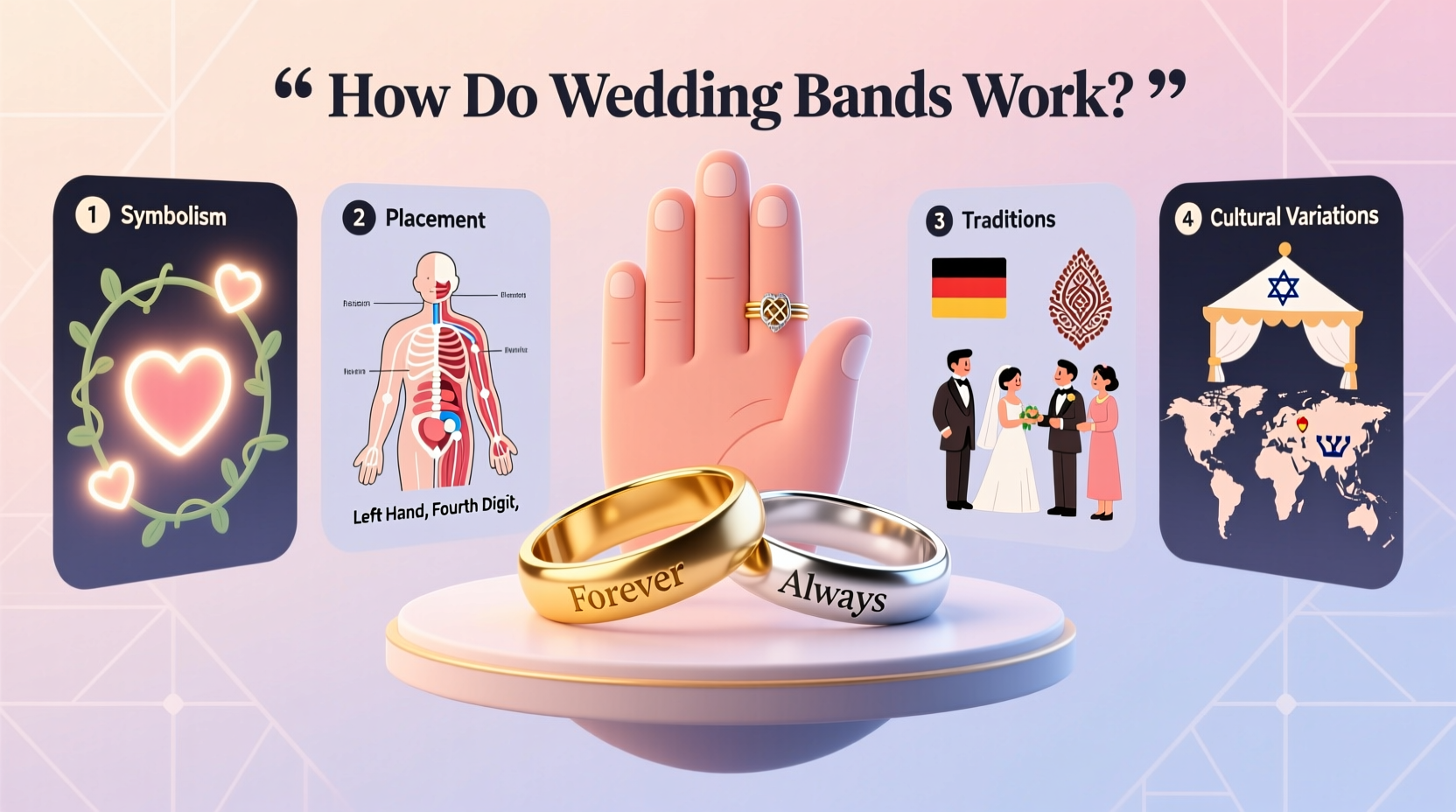
Wedding bands are more than just circular pieces of metal—they symbolize eternal love, commitment, and unity between two people. Understanding how do wedding bands work involves exploring their historical roots, cultural significance, proper wearing etiquette, and coordination with engagement rings. Typically worn on the fourth finger of the left hand in many Western cultures, wedding bands represent an unbroken circle of devotion. But their function goes beyond symbolism; they play a key role in ceremonies, legal recognition of marriage, and daily reminders of marital vows. This guide breaks down every aspect of how wedding bands function—from selection and sizing to cultural variations and modern trends—so couples can make informed decisions aligned with tradition and personal style.
The Symbolic Meaning Behind Wedding Bands
At the heart of every marriage ceremony lies the exchange of wedding bands—a ritual steeped in centuries of tradition. The circular shape of a wedding band has no beginning or end, representing everlasting love and lifelong commitment. Unlike engagement rings, which often feature diamonds and signify intent to marry, wedding bands are simpler in design and are exchanged during the actual wedding ceremony as a physical manifestation of vows.
In many cultures, the act of placing a ring on a partner’s finger signifies ownership in the most romantic sense: a promise to remain faithful and devoted. Ancient Egyptians believed that the vein in the fourth finger (known as the 'vena amoris' or 'vein of love') ran directly to the heart, which is why this finger became the traditional spot for wearing wedding bands. Though modern anatomy disproves this belief, the tradition persists across much of Europe and North America.
Which Hand and Finger Do You Wear a Wedding Band On?
One of the most frequently asked questions related to how do wedding bands work is about proper placement. In the United States, Canada, the United Kingdom, and many other English-speaking countries, wedding bands are traditionally worn on the fourth finger of the left hand, also known as the 'ring finger.'.
However, customs vary globally:
- Germany, Russia, Norway, and India: Wedding bands are worn on the right hand.
- Greece and Colombia: Couples may wear rings on the right hand during the ceremony but switch to the left afterward.
- Orthodox Christian traditions: Rings are often blessed and placed on the right hand during religious ceremonies.
If you're attending or planning a multicultural wedding, it's important to respect these differences. When in doubt, consult with family elders or officiants familiar with regional customs.
How Wedding Bands Function in the Ceremony
The moment when couples exchange rings is one of the most emotional parts of any wedding. So, how do wedding bands work within the structure of a typical ceremony?
- Ring Presentation: Rings are usually carried down the aisle by the best man, maid of honor, or a designated ring bearer.
- Blessing or Dedication: In religious ceremonies, the officiant may bless the rings before they’re placed on fingers.
- Exchange of Vows and Rings: After vows, each partner places the ring on the other’s finger while reciting personalized or traditional phrases such as, 'With this ring, I thee wed.'
- Finalization: Once both rings are on, the officiant often declares the couple officially married.
This ritual reinforces the binding nature of marriage and gives tangible form to abstract promises. Some couples choose to write their own ring exchange wording to reflect their personalities or beliefs.
Choosing the Right Wedding Band: Materials, Styles & Comfort
Selecting a wedding band isn't just about aesthetics—it's about durability, comfort, and long-term wearability. Since most people wear their wedding bands 24/7, choosing the right material and fit is crucial.
Popular Materials for Wedding Bands
| Material | Pros | Cons |
|---|---|---|
| Platinum | Durable, hypoallergenic, retains shine | Expensive, heavy |
| Gold (Yellow, White, Rose) | Versatile, classic look, various price points | Can scratch; rose gold fades over time |
| Titanium | Lightweight, strong, affordable | Difficult to resize |
| Tungsten | Scratch-resistant, modern look | Brittle; cannot be cut off easily in emergencies |
| Stainless Steel | Affordable, durable | Limited resizing options |
Common Band Styles
- Solitaire Band: A simple metal band without stones.
- Eternity Band: Set with continuous diamonds or gemstones around the entire circumference.
- Half-Eternity Band: Stones set across half the band, offering sparkle at a lower cost.
- Contoured or Chevron Bands: Designed to fit snugly against an engagement ring with a curved interior.
- Engraved Bands: Personalized with names, dates, or meaningful messages inside the band.
Matching Engagement Rings and Wedding Bands
Many couples opt for what’s called a 'ring stack'—wearing the engagement ring and wedding band together. To ensure they complement each other, consider the following tips:
- Alignment: Choose a wedding band that contours to the shape of your engagement ring so there’s no gap between them.
- Metal Consistency: Match metals (e.g., white gold engagement ring + white gold band) for a seamless look.
- Stone Coordination: If your engagement ring has side stones, select a band with similar accents to create continuity.
- Timeless Over Trendy: Avoid overly trendy designs that might clash in a few years.
Some jewelers offer 'bridal sets'—pre-matched engagement rings and wedding bands—making coordination easier. Others provide custom design services to craft a perfectly fitting pair.
Sizing and Fit: Ensuring Your Wedding Band Stays Comfortable
Getting the correct ring size is essential. Fingers can swell due to temperature, weight changes, or pregnancy, so timing matters when getting sized. It's best to get measured later in the day when fingers are slightly larger.
Key considerations:
- Width Impact: Wider bands (6mm+) feel tighter than narrow ones (2–3mm), so you may need to go up half a size.
- Comfort Fit: Many modern bands have an inner rounded edge for easier sliding and all-day comfort.
- Resizing Limitations: Certain materials like tungsten or ceramic cannot be resized, so precision is critical.
- Try Before You Buy: Always test a sample ring in your suspected size before finalizing.
If unsure, purchase from retailers with free resizing policies within a certain timeframe.
Cultural and Religious Variations in Wedding Band Use
Understanding how wedding bands work across different cultures adds depth to their meaning. While the core idea of a symbolic ring remains consistent, practices differ significantly:
- Jewish Weddings: The ring must be plain, solid gold, and placed on the right index finger during the ceremony. Afterward, many switch it to the left hand.
- Hindu Marriages: Brides often receive toe rings ('bichiya') and bangles rather than finger rings, though Western-style wedding bands are becoming more common.
- Christian Denominations: Catholic, Protestant, and Orthodox churches all incorporate rings differently, with some blessing them and others viewing them as optional.
- Same-Sex Couples: Modern interpretations allow for flexibility in ring exchange order and styling, emphasizing mutual consent and equality.
For interfaith or international weddings, blending traditions thoughtfully honors both partners’ backgrounds.
Modern Trends in Wedding Bands
As societal norms evolve, so do wedding band styles and meanings. Recent trends include:
- Gender-Neutral Designs: Minimalist bands in matte finishes appeal to non-binary and gender-fluid individuals.
- Sustainable Jewelry: Lab-grown diamonds and recycled metals attract eco-conscious couples.
- Double Ring Ceremonies: Both partners actively participate in placing rings, reinforcing shared responsibility.
- Alternative Metals: Cobalt, zirconium, and carbon fiber offer unique looks and enhanced durability.
- Smart Rings: Emerging tech includes rings with embedded NFC chips storing wedding photos or vows.
These innovations show how wedding bands continue to adapt while maintaining their foundational purpose.
Common Mistakes to Avoid When Choosing Wedding Bands
Even with good intentions, couples often make avoidable errors. Here are key pitfalls to watch for:
- Ignoring Lifestyle Needs: Someone who works with their hands should avoid delicate settings or high-polish finishes that scratch easily.
- Overlooking Long-Term Wear: A flashy eternity band may lose appeal after years of daily use.
- Skipping Professional Sizing: Guessing sizes leads to discomfort or costly adjustments later.
- Mismatched Metals: Mixing yellow and white gold without intention can look inconsistent.
- Not Considering Engraving: Adding a date or short phrase inside the band personalizes it meaningfully.
Frequently Asked Questions About Wedding Bands
Do you wear your engagement ring during the wedding ceremony?
Traditionally, the bride wears her engagement ring on her right hand during the ceremony so the wedding band can be placed first on the left ring finger. After the ceremony, she typically moves the engagement ring back, stacking it above the wedding band.
Can men wear wedding bands?
Absolutely. While not always practiced historically, it's now standard in most Western cultures for both spouses to wear wedding bands as a visible sign of commitment.
What if my wedding band doesn’t fit anymore?
Most jewelers offer resizing services for metal rings. However, rings made from tungsten, ceramic, or wood cannot be resized and may need replacement.
Should wedding bands match engagement rings exactly?
They don’t have to match perfectly, but they should complement each other. Many couples mix metals or styles intentionally for a personalized look.
Is it okay to not wear a wedding band?
Yes. While common, wearing a wedding band is a personal choice. Some people avoid jewelry due to job requirements, safety concerns, or personal preference—and that doesn’t diminish their commitment.





 浙公网安备
33010002000092号
浙公网安备
33010002000092号 浙B2-20120091-4