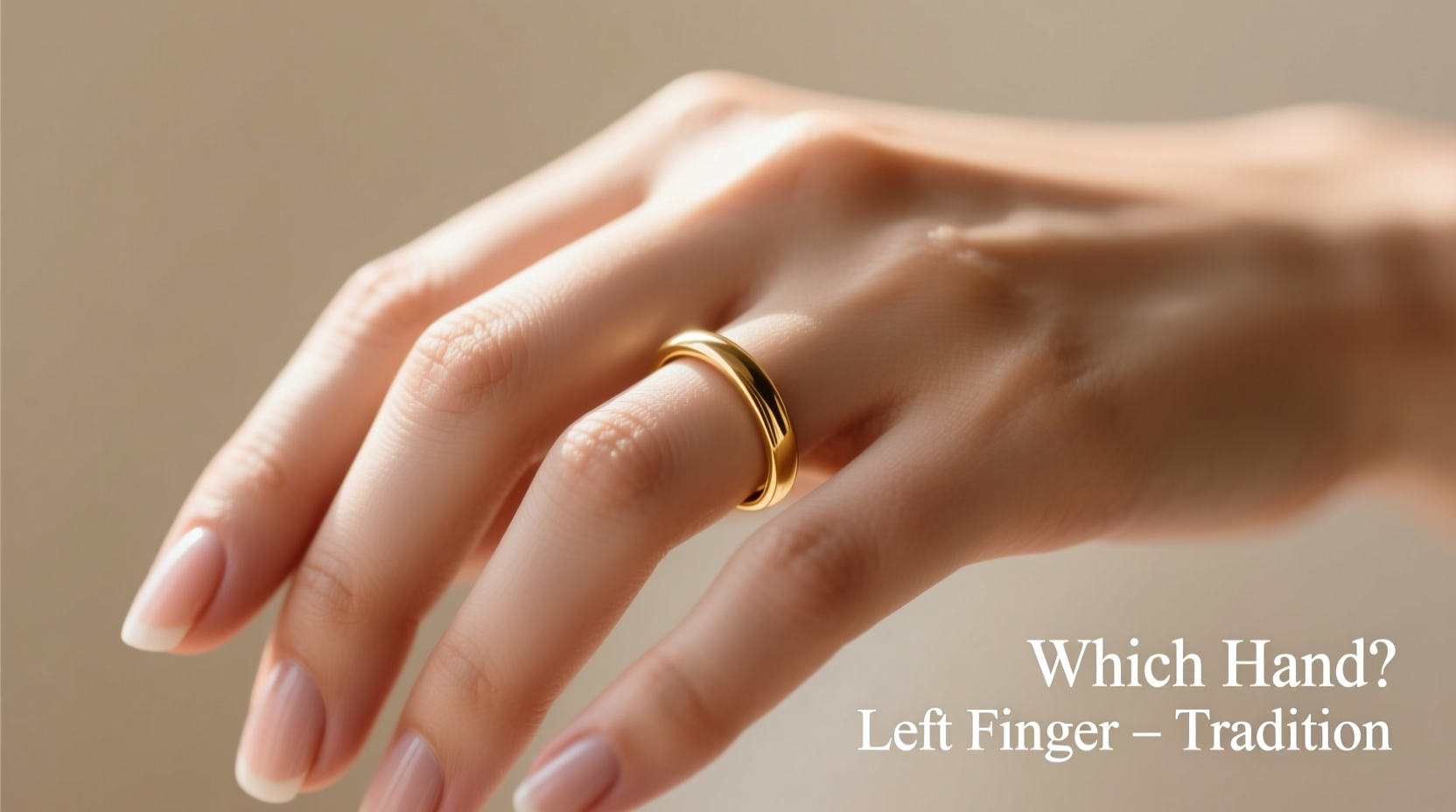
When it comes to wedding traditions, one of the most frequently asked questions is: what hand does a wedding ring go on? In many Western countries, including the United States, Canada, and the United Kingdom, the wedding ring is traditionally worn on the fourth finger of the left hand, commonly referred to as the 'ring finger.' This practice stems from the ancient Roman belief in the 'vena amoris,' or 'vein of love,' thought to run directly from this finger to the heart—symbolizing eternal love and connection. While this remains the standard in many cultures today, customs vary widely around the world, making it essential for couples and guests alike to understand regional and religious differences when attending or planning a wedding.
The Historical Origins of the Ring Finger Tradition
The tradition of wearing a wedding ring on the fourth finger of the left hand dates back over 3,000 years. The ancient Egyptians were among the first to exchange rings as symbols of eternity due to their circular shape with no beginning or end. They wore these rings on the left ring finger, believing that the 'vena amoris' connected it directly to the heart.
This idea was later adopted by the Romans, who formalized the practice during marriage ceremonies. Roman men would present an iron ring to their brides as a sign of ownership and commitment. Over time, iron was replaced with gold and precious metals, but the placement remained consistent throughout much of Europe.
By the Middle Ages, Christian wedding ceremonies began incorporating ring exchanges, reinforcing the left-hand tradition. The 1549 Book of Common Prayer, used in the Church of England, specified placing the ring on the left ring finger during the vows, further cementing the custom in Western culture.
Cultural Variations: Where Else Do People Wear Wedding Rings?
While the left-hand rule dominates in English-speaking countries, many nations follow different customs based on religion, language, and historical influences. Understanding these variations is especially important for multicultural weddings or international guests.
Countries Where the Wedding Ring Is Worn on the Right Hand
In several European, Eastern European, and Latin American countries, the wedding ring is traditionally worn on the right hand. These include:
- Germany – Couples wear engagement and wedding rings on the right ring finger.
- Russia – Orthodox Christians place both rings on the right hand.
- India – Traditionally, Hindu brides wear toe rings and bangles, but modern urban couples often adopt Western styles; however, some communities still favor the right hand.
- Brazil, Norway, and Denmark – All typically use the right ring finger for wedding bands.
- Greece – During the Orthodox ceremony, the priest places the rings on the right hand.
These practices are deeply rooted in religious doctrine and national identity. For example, in Eastern Orthodox Christianity, the right hand symbolizes honor and strength, making it the preferred side for sacred objects like wedding rings.
Religious Influences on Ring Placement
Religion plays a significant role in determining which hand a wedding ring goes on. Here’s how major faiths approach the tradition:
| Religion | Ring Hand | Notes |
|---|---|---|
| Christianity (Protestant/Catholic) | Left | Follows Roman tradition; common in North America and Western Europe |
| Eastern Orthodox Christianity | Right | Rings blessed and placed on right hand during ceremony |
| Judaism | Right (during ceremony), often switched to left afterward | Ring placed on right index finger during chuppah; post-wedding wear varies |
| Islam | No strict rule; usually right hand for men, left for women | Influenced by hadith; silver rings allowed for men |
| Hinduism | Varies; feet, hands, or nose | Toe rings (bichiya) common; wedding finger not emphasized |
Modern Trends and Personal Preferences
Today, more couples are choosing to personalize their wedding rituals, including ring placement. Some opt for non-traditional styles such as:
- Wearing rings on both hands – Especially in interfaith marriages where each partner follows their cultural norm.
- Stacking rings – Engagement ring on left, wedding band on right, or vice versa.
- Gender-neutral choices – Same-sex couples may choose ring placement based on comfort rather than tradition.
- Tattoo rings – Permanent ink designs replacing physical bands, sometimes on either hand.
Additionally, fashion trends have influenced ring-wearing habits. Some individuals prefer the right hand simply because they are left-handed and want to avoid damage to delicate jewelry during daily tasks.
Practical Advice for Couples Planning Their Ceremony
If you're preparing for your wedding, here are key considerations when deciding what hand your wedding ring should go on:
1. Honor Cultural or Religious Backgrounds
Respect the traditions of both partners. If one comes from a country where the right hand is customary, discuss whether to follow that practice—even if it differs from local norms.
2. Communicate with Your Officiant
Your officiant will guide you through the ring exchange portion of the ceremony. Make sure they know your preference. For example, in a Jewish wedding, the rabbi expects the ring to be placed on the index finger unless otherwise discussed.
3. Consider Comfort and Lifestyle
A desk worker who types all day might find a left-hand ring inconvenient. Similarly, someone in construction may prefer not to wear a ring at all during work hours. Discuss practicality with your partner before finalizing your decision.
4. Be Mindful of Symbolism
The ring represents unity and commitment. Whether worn on the left or right, its meaning transcends geography. Focus on the emotional significance rather than rigid adherence to rules.
5. Inform Guests and Photographers
If you’re deviating from local tradition (e.g., wearing your ring on the right in the U.S.), let your photographer know so they can capture meaningful moments correctly. Also, consider adding a note in your program explaining any unique customs for clarity.
Mistakes to Avoid When Choosing Ring Placement
Even well-intentioned decisions can lead to confusion or discomfort. Watch out for these common pitfalls:
- Assuming everyone follows the same rule – Don’t assume your partner knows which hand to use without discussing it.
- Ignoring legal or religious requirements – Some religious institutions require specific placements for the marriage to be recognized.
- Forgetting about future consistency – Switching hands after the wedding can cause confusion or make documentation (like ID photos) inconsistent.
- Overlooking ring design compatibility – If you plan to wear an engagement ring alongside your wedding band, ensure the setting works ergonomically on your chosen hand.
How to Handle Mixed-Culture Weddings
In multicultural unions, couples often blend traditions. Here are three popular approaches:
Option 1: Alternate Hands
Each partner wears their ring on the hand associated with their heritage. For instance, an American bride might wear hers on the left, while her German groom wears his on the right—a visible symbol of unity in diversity.
Option 2: Dual Ceremonies
Hold two ceremonies following each tradition, allowing both families to participate fully. Rings may be exchanged twice—once on each hand—with eventual consolidation after the event.
Option 3: Create a New Tradition
Some couples invent their own ritual—such as placing the ring on the heart first before sliding it onto the chosen finger. This emphasizes intentionality and personal meaning over convention.
Common Questions About Wedding Ring Placement
Here are answers to frequently asked questions about what hand a wedding ring goes on:
- Do engagement rings go on the same hand as wedding rings?
- In countries where the wedding ring goes on the left ring finger, the engagement ring is typically worn on the same finger. After marriage, some switch the order so the wedding band sits closer to the heart (i.e., underneath the engagement ring).
- Can I wear my wedding ring on a chain around my neck?
- Yes, especially if your job makes wearing a ring unsafe (e.g., healthcare, machinery). Many view this as a safe alternative that keeps the symbol close to the heart.
- Is it bad luck to wear a wedding ring before the ceremony?
- Superstitions vary. Some believe doing so invites misfortune, while others see no issue. Ultimately, it's a personal choice—many couples try on rings during fittings or photo shoots beforehand.
- What if I lose my ring or it doesn’t fit?
- Temporary solutions include resizing, using ring guards, or wearing a placeholder band. The emotional bond matters more than the physical object.
- Are there countries where people don’t wear wedding rings?
- Yes. In parts of Asia, Africa, and Indigenous cultures, other symbols like bracelets, necklaces, or tattoos signify marital status instead of rings.
Final Thoughts: It’s About Meaning, Not Just Mechanics
So, what hand does a wedding ring go on? The answer depends on where you are, what you believe, and who you are marrying. While the left ring finger remains standard in many parts of the world, global awareness and inclusivity have made room for diverse expressions of love.
Whether you follow centuries-old customs or forge a new path, the true significance lies not in which hand bears the ring—but in the promise it represents. As long as both partners agree and feel comfortable with their choice, the tradition becomes uniquely theirs.
Before finalizing your plans, research your cultural roots, consult your officiant, and communicate openly with your fiancé. A little preparation ensures your wedding day runs smoothly—and your lifelong symbol of love fits perfectly, both literally and figuratively.





 浙公网安备
33010002000092号
浙公网安备
33010002000092号 浙B2-20120091-4