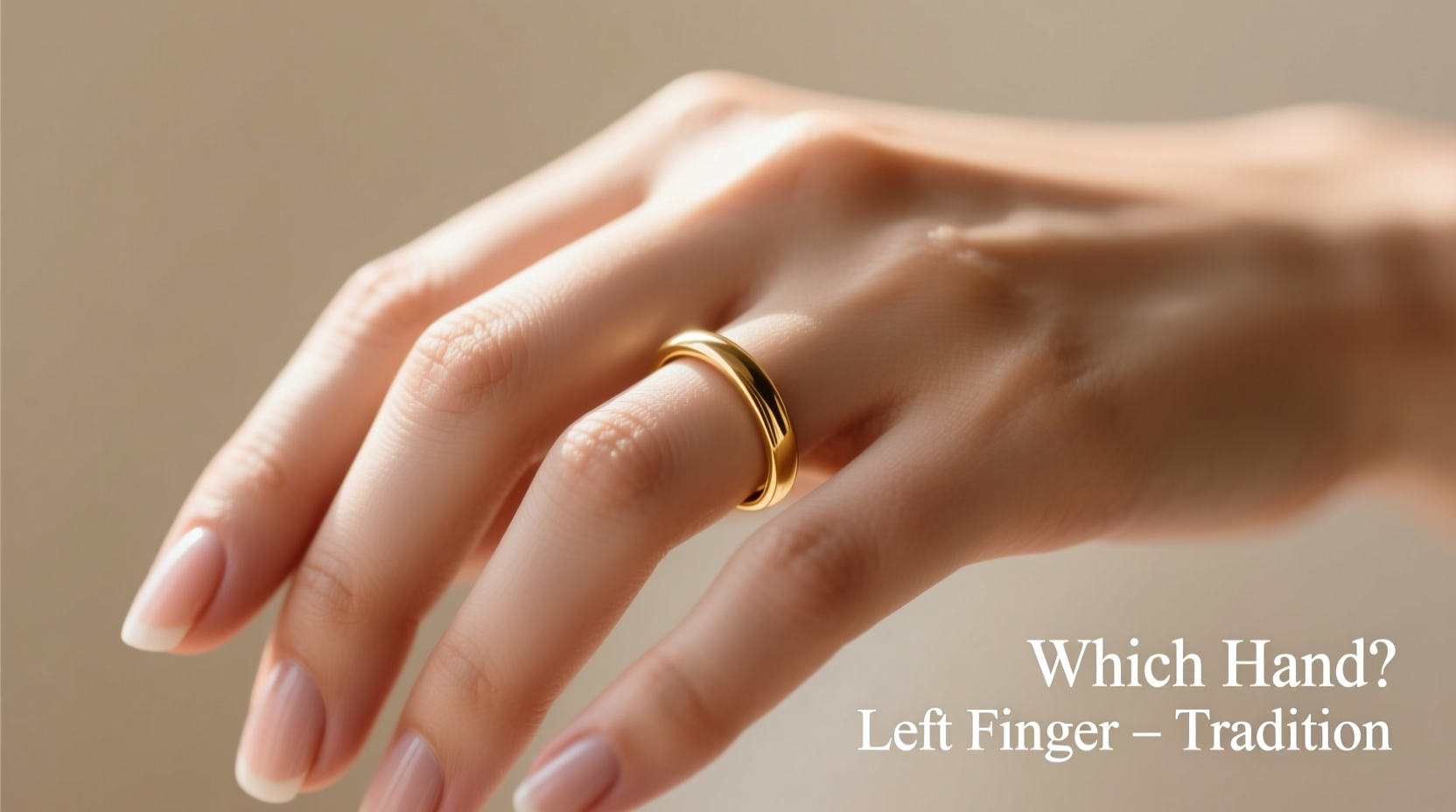
When it comes to wedding traditions, one of the most frequently asked questions is: what hand does a wedding ring go on? In many Western cultures, including the United States, Canada, and the United Kingdom, the wedding ring is traditionally worn on the fourth finger of the left hand, commonly known as the 'ring finger.' This practice stems from the ancient belief in the vena amoris, or 'vein of love,' said to run directly from this finger to the heart. While modern science has debunked this anatomical myth, the symbolism remains powerful and widely embraced. Understanding the tradition behind where to wear a wedding ring—and how it varies across cultures—is essential for couples planning their ceremony and selecting meaningful wedding jewelry.
The Historical Origins of the Ring Finger Tradition
The custom of placing a wedding ring on the fourth finger of the left hand dates back to ancient Egypt and Rome. Egyptians believed that the vein in the fourth finger led directly to the heart, making it the perfect vessel for a symbol of eternal love. The Romans adopted this idea, calling it the vena amoris. During Roman betrothals, rings were placed on this finger as a sign of ownership and commitment. Early Christian ceremonies later incorporated this practice, solidifying its place in Western matrimonial customs.
By the Middle Ages, European engagement and wedding rings were routinely exchanged and worn on the left ring finger. The Book of Common Prayer (1549), used in Anglican ceremonies, explicitly instructed grooms to place the ring 'on her fourth finger of the left hand.' This formalized the ritual in English-speaking countries and influenced practices in former British colonies, including Australia, New Zealand, and parts of Africa.
Cultural Variations: Where Else Is the Wedding Ring Worn?
While the left-hand tradition dominates in many English-speaking nations, numerous countries and cultures place the wedding ring on the right hand. These differences are deeply rooted in religious, historical, and regional customs. It's important for couples in multicultural relationships or those attending international weddings to understand these variations to avoid confusion or unintentional disrespect.
Below is a breakdown of wedding ring practices by region:
| Country/Region | Hand for Wedding Ring | Notes |
|---|---|---|
| United States, UK, Canada, France, Mexico | Left hand | Follows Western Christian tradition |
| Germany, Russia, India, Poland, Norway | Right hand | Strong cultural or religious roots; Orthodox Christians often use right hand |
| Brazil, Turkey, Greece | Right hand (ceremony), may switch to left (daily) | Variation based on personal or family preference |
| Colombia, Venezuela | Right hand during engagement, left after marriage | Symbolizes transition from engagement to marriage |
| China | No strict rule; increasingly adopting left-hand tradition | Influenced by Western trends, especially in urban areas |
For interfaith or international couples, deciding which hand to wear the ring on can be a meaningful way to honor both partners’ backgrounds. Some choose to follow the tradition of the country where they’re marrying, while others blend customs—such as wearing an engagement ring on the left and a wedding band on the right.
Religious Influences on Wedding Ring Placement
Religion plays a significant role in determining which hand receives the wedding ring. Here’s how major faiths approach the practice:
- Christianity: Most Protestant and Catholic denominations place the ring on the left hand. However, Eastern Orthodox churches—including Greek, Russian, and Serbian Orthodox—typically use the right hand, symbolizing strength, honor, and divine blessing.
- Judaism: In Jewish weddings, the ring is placed on the right index finger of the bride (or both partners in Reform ceremonies). After the ceremony, many Jews move the ring to the left ring finger for daily wear, aligning with local customs.
- Islam: Islamic tradition does not prescribe a specific finger or hand for wedding rings. Both men and women may wear rings, but they are typically worn on the right hand, avoiding the index and middle fingers, which some scholars associate with improper gestures.
- Hinduism: Indian brides often receive toe rings (bichiya) and bangles as marital symbols. Finger rings are increasingly common due to Western influence, usually worn on the right hand, especially in North India.
Couples from different religious backgrounds should discuss these customs early in wedding planning. An officiant familiar with both traditions can help design a ceremony that respects each partner’s heritage.
Practical Considerations When Choosing Ring Placement
Beyond tradition, several practical factors influence where you might choose to wear your wedding ring:
1. Dominant Hand Usage
Many people opt to wear their ring on their non-dominant hand to minimize wear and tear. For right-handed individuals, this means the left hand; for left-handed people, the right. Rings on the dominant hand are more prone to scratches, knocks, and potential loss during manual tasks.
2. Comfort and Fit
Finger size can fluctuate throughout the day due to temperature, hydration, or weight changes. If one hand tends to swell more (e.g., from typing or exercise), wearing the ring on the other hand may improve comfort. Some people even alternate hands depending on the activity—removing or switching the ring during work or sports.
3. Jewelry Stacking and Aesthetics
Couples who wear both engagement and wedding bands often stack them on the same finger. The left ring finger is the most common choice in Western countries for visual symmetry and ease of matching metal tones and designs. However, some prefer a split look—wearing the engagement ring on one hand and the wedding band on the other—for a unique style statement.
4. Workplace and Safety Concerns
In professions involving machinery, healthcare, or food service, wearing rings can pose safety or hygiene risks. Nurses, mechanics, and chefs may choose to remove their rings during shifts or wear silicone alternatives. In such cases, the decision about which hand to use becomes less about tradition and more about practicality.
Modern Trends and Personalization
Today’s couples are redefining wedding traditions to reflect their personal values. While many still follow cultural norms, others use ring placement as a form of self-expression. Some emerging trends include:
- Gender-Neutral Rings: More men are wearing wedding bands, often on the left hand in line with their partner, regardless of cultural background.
- Matching But Not Identical: Couples choose rings that complement rather than mirror each other, sometimes opting for different metals or textures based on hand dominance.
- Temporary Ceremonial Rings: Some couples use symbolic rings during the ceremony and switch to everyday bands afterward, allowing flexibility in hand selection.
- Tattoo Rings: As an alternative to physical jewelry, some couples get minimalist ring tattoos on the traditional finger, preserving the symbolism without the risk of loss.
Wedding planners and jewelers increasingly encourage couples to view ring placement as a personal choice rather than a rigid rule. The meaning behind the gesture—commitment, love, partnership—matters far more than the hand it adorns.
Common Mistakes to Avoid
Even with good intentions, couples and guests sometimes make errors related to wedding ring etiquette. Here are key pitfalls to avoid:
- Assuming Universality: Don’t assume everyone wears their ring on the left. At international weddings, observe local customs or ask discreetly.
- Misplacing the Ring During Ceremony: Nervousness can lead to fumbling. Practice the ring exchange with placeholder bands beforehand.
- Ignoring Allergies or Fit Issues: Ensure the ring fits comfortably on the chosen finger. Hypoallergenic metals like platinum or titanium may be necessary for sensitive skin.
- Overlooking Cultural Sensitivity: In multicultural settings, failing to acknowledge differing traditions can unintentionally offend. Open dialogue with families and officiants is crucial.
How to Decide What’s Right for You
If you're unsure which hand to wear your wedding ring on, consider the following steps:
- Discuss with Your Partner: Talk about your cultural, religious, and personal preferences. Find common ground or a compromise that honors both of you.
- Consult Your Officiant: Religious or secular officiants can advise on ceremonial expectations and help integrate meaningful rituals.
- Test Wear Both Options: Try on your ring on both ring fingers. Notice which feels more natural, comfortable, or symbolic.
- Consider Long-Term Lifestyle: Think about your job, hobbies, and daily routines. Will the ring interfere with your activities?
- Make It Official—but Flexible: You can always change hands later. Many people switch after the honeymoon or adapt based on new circumstances.
Ultimately, the choice of which hand to wear your wedding ring on is deeply personal. Whether you follow centuries-old tradition or create your own custom, the ring serves as a daily reminder of your bond.
Frequently Asked Questions
Does the engagement ring go on the same hand as the wedding ring?
Yes, in most Western traditions, both the engagement ring and wedding band are worn on the fourth finger of the left hand. The wedding band is typically placed closest to the heart (innermost), with the engagement ring above it.
Can I wear my wedding ring on a chain around my neck?
Yes, especially if your job or lifestyle makes finger rings impractical. Many people wear their wedding ring on a necklace for safety or sentimentality, particularly during travel or military service.
What if my culture uses the right hand but we’re marrying in the U.S.?
You can honor your tradition by wearing the ring on the right hand during the ceremony, even in a Western-style wedding. Inform your officiant in advance so they can adjust the wording accordingly.
Do same-sex couples follow the same ring rules?
Same-sex couples are not bound by traditional gender roles and often choose ring placement based on personal preference, comfort, or aesthetic balance. There are no strict rules—many coordinate with their partner’s hand choice for unity.
Is it bad luck to take off your wedding ring?
No, there is no universal truth to this superstition. Removing your ring for safety, cleaning, or repairs is perfectly acceptable. The commitment matters more than constant physical wear.





 浙公网安备
33010002000092号
浙公网安备
33010002000092号 浙B2-20120091-4