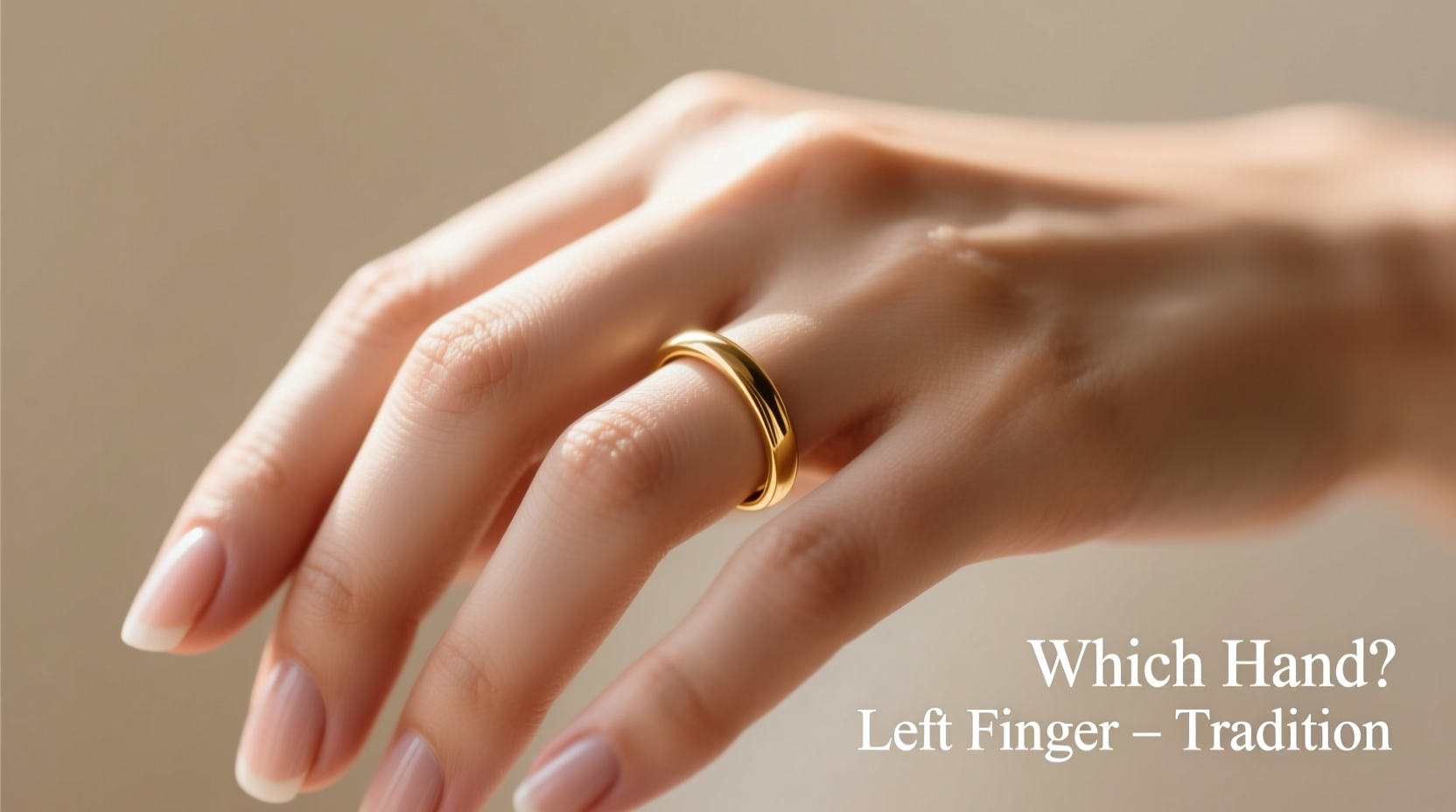
When it comes to wedding traditions, one of the most frequently asked questions is: what hand does a wedding ring go on? In many Western countries, including the United States, Canada, and the United Kingdom, the wedding ring is traditionally worn on the fourth finger of the left hand, commonly known as the 'ring finger.' This custom stems from an ancient Roman belief that a vein in this fingerâthe vena amoris, or 'vein of love'âruns directly to the heart. While modern anatomy has debunked this notion, the romantic symbolism endures, making the left-hand ring finger the standard choice for wedding bands in Anglo-American cultures. Understanding this tradition is essential whether you're planning your own ceremony or attending a friend's celebration of love.
The Historical Origins of the Ring Finger Tradition
The practice of wearing wedding rings on the fourth finger of the left hand dates back over 3,000 years. Ancient Egyptians were among the first to exchange rings as symbols of eternal love, placing them on the left ring finger due to their belief in the vena amoris. The Romans adopted this custom, reinforcing the idea that this specific vein connected the finger directly to the heartâa powerful metaphor for emotional connection.
By the Middle Ages, Christian ceremonies in Europe began incorporating ring exchanges during marriage rites. The Mirour de l'Omme, a 14th-century poem, references placing the ring on the left handâs fourth finger. Eventually, this evolved into standardized liturgical practice. The 1549 Book of Common Prayer in England formalized the gesture, instructing grooms to place the ring on the left hand while saying, 'With this ring I thee wed.'
This historical continuity explains why, today, couples across much of North America and Western Europe continue the tradition without question. However, it's important to note that not all cultures follow this ruleâa fact often overlooked by those unfamiliar with global wedding customs.
Cultural Variations: Where Else Do People Wear Wedding Rings?
While the left-hand tradition dominates in English-speaking countries, numerous cultures place wedding rings on the right hand. These differences are rooted in regional history, religion, and linguistic nuances. Below is a breakdown of key examples:
- Germany and the Netherlands: Couples wear engagement rings on the left hand but switch the wedding band to the right after marriage.
- Russia, Poland, Ukraine, and other Eastern European nations: Both engagement and wedding rings are worn on the right handâs fourth finger. \li>India: Traditionally, Hindu brides wear toe rings and bangles rather than finger rings, though modern urban couples may adopt Western styles. In some regions, women wear wedding bands on the right hand.
- Greece: Greek Orthodox ceremonies typically involve placing the ring on the right hand. The priest blesses the rings and places them first on the right handâs ring finger.
- Spain, Portugal, and parts of Scandinavia: Customs vary by region. In Spain, for example, civil ceremonies often use the left hand, while religious ones may favor the right.
- Muslim-majority countries: Islamic law doesnât prescribe a specific hand, so practices vary. In Turkey and Lebanon, many wear wedding rings on the right hand.
These variations highlight how deeply culture influences even the smallest details of wedding rituals. For international couples or those attending multicultural weddings, being aware of these customs fosters respect and avoids unintended faux pas.
Religious Influences on Ring Placement
Religion plays a significant role in determining which hand receives the wedding ring. Different faiths have distinct ceremonial guidelines:
| Religion | Ring Hand | Notes |
|---|---|---|
| Christianity (Protestant/Catholic) | Left | Follows Roman tradition; common in U.S., UK, Australia |
| Eastern Orthodox Christianity | Right | Used in Greece, Russia, Serbia; symbolizes God's righteousness |
| Judaism | Right (during ceremony), then often moved | Ring placed on right index finger during chuppah; post-ceremony placement varies |
| Islam | No fixed rule | Generally no religious requirement; cultural norms apply |
| Hinduism | Not traditional | Toe rings (bichiya) and mangalsutra necklace are primary symbols |
In Jewish weddings, for instance, the groom places the ring on the brideâs right index finger during the chuppah (wedding canopy), following Talmudic law. Afterward, many couples choose to move the ring to the left ring finger for daily wear, blending tradition with personal preference.
Practical Considerations: Comfort, Career, and Customization
Beyond tradition, practical factors influence where people choose to wear their wedding rings. Some individuals opt for non-traditional placements based on lifestyle needs:
- Dominant hand protection: Left-handed individuals may prefer wearing the ring on the right hand to reduce wear and tear.
- Occupational safety: Workers in construction, healthcare, or manufacturing may avoid wearing rings on either hand for safety reasons, opting instead for silicone alternatives or removing them during shifts.
- Allergies or skin sensitivities: Some metals cause irritation, leading couples to choose hypoallergenic materials or alternate fingers.
- Fashion and personal expression: Modern couples increasingly customize their ring-wearing habits, stacking multiple bands or choosing symbolic placements.
There is no legal requirement dictating which hand must bear the ring. Ultimately, the decision rests with the couple. Whether honoring ancestral customs or forging new traditions, authenticity matters more than conformity.
Common Misconceptions About Wedding Ring Placement
Several myths persist about wedding ring etiquette. Clarifying these helps prevent confusion:
- Myth: Wearing the ring on the wrong hand invalidates the marriage.
Fact: Marriage legality depends on legal documentation and officiant registration, not ring placement. - Myth: Engagement and wedding rings must always match.
Fact: Mix-and-match styles are increasingly popular. Many couples choose complementary but distinct designs. \li>Myth: Only women wear wedding rings. - Myth: The 'vein of love' is scientifically real.
Fact: No anatomical evidence supports the existence of a unique vein connecting the ring finger to the heart. It remains a poetic metaphor.
Fact: Menâs wedding bands have become standard in most Western countries since World War II, though adoption varies globally.
Understanding these misconceptions empowers couples to make informed choices free from social pressure.
Same-Sex Weddings and Ring Exchange Etiquette
In same-sex marriages, ring exchange follows similar symbolic principles but allows greater flexibility. There is no prescribed 'groom' or 'bride' role, so couples decide together how to incorporate rings. Options include:
- Exchanging rings simultaneously on the left ring fingers.
- Choosing different hands based on personal significance.
- Using matching or contrasting bands to reflect individual identities.
Wedding officiants often encourage LGBTQ+ couples to personalize every aspect of their ceremony, including ring vows and placement. This inclusivity reinforces the evolving nature of wedding traditions.
Tips for Choosing and Wearing Your Wedding Ring
To ensure comfort, durability, and meaning, consider these expert tips when selecting and wearing your wedding band:
- Measure your finger at the end of the day: Fingers swell slightly throughout the day, so getting sized in the evening ensures a better fit.
- Consider future changes: Weight fluctuations, aging, or medical conditions can affect ring fit. Opt for resizable materials like titanium or silicone if uncertain.
- Coordinate with your engagement ring: If wearing both, ensure the bands align well. Some opt for a wedding band designed to sit flush against the engagement ring.
- Engrave a meaningful message: Personalize your ring with initials, wedding date, or a short phrase in a language that holds significance.
- Insure your ring: High-value jewelry should be covered under homeownerâs or renterâs insurance to protect against loss or theft.
Regular cleaning and professional check-ups help maintain the ringâs appearance and structural integrity over time.
Navigating Cross-Cultural Weddings
For couples from different cultural backgrounds, deciding which hand to wear the ring on can require thoughtful discussion. Strategies for harmonizing traditions include:
- Adopting one partnerâs cultural norm as a sign of respect.
- Combining customsâe.g., wearing the ring on the right hand during the ceremony and switching to the left afterward.
- Explaining the chosen tradition in the wedding program to educate guests.
Open communication ensures both partners feel represented and honored. A skilled wedding planner or officiant can help integrate diverse elements seamlessly.
Frequently Asked Questions
Does it matter which hand I wear my wedding ring on?
Noâthere is no universal rule. While tradition guides many, personal comfort and cultural background are equally valid considerations.
Can I wear my wedding ring on a chain around my neck?
Yes. Some people, especially those in high-risk professions, wear their rings on a necklace for safety. Others do so as a sentimental gesture when separated from their spouse.
Do divorced or widowed people remove their wedding rings?
It varies. Widowed individuals may continue wearing the ring as a memorial or transition to wearing it on the right hand. Divorced people often remove it, though some repurpose the ring into jewelry.
Is it strange to wear no wedding ring at all?
Not at all. Increasing numbers of couples choose not to wear rings due to lifestyle, philosophical beliefs, or financial reasons. Commitment is expressed in many ways beyond physical symbols.
How do I know if my country wears wedding rings on the left or right hand?
Research local customs or consult with a wedding officiant familiar with regional traditions. When in doubt, observe how married locals wear their rings or ask respectfully.





 浙公网安备
33010002000092号
浙公网安备
33010002000092号 浙B2-20120091-4